

TelephoneLists.biz
© 2026 Electronic Voice Services, Inc. | All rights reserved
NOTICE: Electronic Voice Services, Inc. (TelephoneLists.biz) is a data broker registered with the Texas Secretary of State and in other applicable states.
Cold Calling
Tips for Acquiring New Leads
 Jul 23, 2024
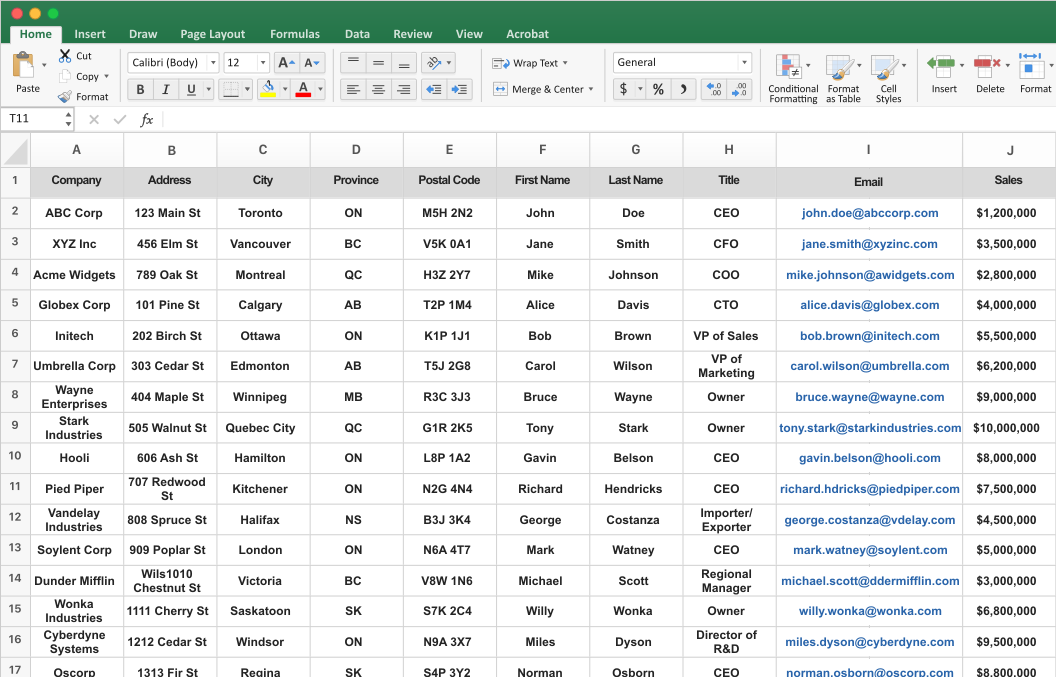
Sales lead generation is vital for businesses to acquire customers and sales, and it evolves rapidly. A sales lead is a potential client interested in a company's product or service. To find sales leads, businesses can use referrals, product trials, website inquiries, and social media interactions. Effective lead generation involves understanding the target market and employing appropriate marketing strategies. Leads are categorized into qualified and unqualified; qualified leads meet all purchasing criteria, while unqualified leads may require nurturing. Eight methods to generate sales leads include buying high-quality lead lists, utilizing online reviews, creating diverse content, engaging through social media, building relationships, asking for referrals, implementing email marketing, and attending networking events. Additionally, developing a word-of-mouth channel can enhance lead generation. These techniques help expand the potential customer base and optimize marketing efforts.
To find new leads for cold calling, define the people or businesses you want to reach, choose a source that can identify them, and check the records before adding them to your calling queue. Useful sources include business directories, company websites, customer referrals, inbound inquiries, and targeted prospect databases.
The right mix depends on who you sell to, how many new contacts you need, and how much research each potential sale can justify. This guide explains what each source provides and how to turn those contacts into a focused prospect list.
A contact record is a starting point. A person or business may match your target market without having expressed interest in your offer. Keep sourced prospects, inbound inquiries, and qualified opportunities separate so your team understands the context before calling.
1. Define who belongs on your prospect list
Before collecting phone numbers, write down the criteria that make someone worth contacting. “Small businesses” is a broad category. “Independent accounting firms in our service area with 5–19 employees” gives you a specific audience to research and a more consistent reason for calling.
| Criteria | Business prospects | Consumer prospects |
|---|---|---|
| Location | States, cities, counties, or ZIP codes you serve | Households within your actual service territory |
| Audience fit | Industry, employee range, and relevant business characteristics | Relevant household or property characteristics, where available and appropriate |
| Person to reach | The owner or role responsible for the purchase | The person who can evaluate the service and make the decision |
| Exclusions | Existing customers, competitors, unsuitable accounts, and suppressed contacts | Existing customers, out-of-area records, and suppressed contacts |
| What to confirm | Need, timing, buying process, and decision-making role | Need, interest, service suitability, and timing |
Start with geography and two or three meaningful criteria. Add a filter when it changes whether you can serve the prospect or what you would say to them. Applying every available filter can make your audience unnecessarily small.
2. Compare sources before collecting contacts
Some sources help you identify a large audience. Others provide a personal introduction or evidence of interest. Choose a source based on the information you need and the work required to make it useful.
| Source | Useful when you need | Main tradeoff |
|---|---|---|
| Directories and company websites | A small, carefully researched business list | Manual research takes time; published numbers may reach a main office |
| Professional networks | Names, roles, and context within target companies | A relevant profile does not necessarily provide a usable phone number |
| Referrals and partners | An introduction with relevant background | Volume depends on your relationships and available introductions |
| Inbound inquiries | People who have requested information | Volume depends on your marketing; inquiries still need qualification |
| Targeted prospect lists | Recurring access to contacts matching audience filters | Matching records do not establish interest, consent, or purchase readiness |
| Previous CRM inquiries | Relevant conversations to revisit | These are existing contacts whose details or circumstances may have changed |
3. Where to find new leads for cold calling
Business directories and company websites
For a focused B2B campaign, start with local business directories, chamber of commerce listings, industry associations, and company websites. Search for a specific business category in a location you serve, then check each company against your criteria.
- Confirm that the company operates in the market you expect.
- Check its website for current services, locations, and contact details.
- Record the business phone number and the role you need to reach.
- Save the source URL and the date you checked it.
This approach works well when each account deserves individual research. A commercial cleaning company could identify local dental offices and confirm their locations before contacting the practice manager. Review directory terms before exporting or automating collection.
Professional networks and business announcements
Professional profiles, company team pages, and business announcements can help identify who handles a purchase. A new location, hiring announcement, or service expansion may also give you a specific reason to research an account.
Separate verified facts from assumptions. “Opened a second office” is a fact you can check. “Needs a new phone system” is a question to explore. Confirm the person's current role and use an appropriate business contact channel.
Customer referrals and complementary businesses
Ask satisfied customers for a specific kind of introduction. “Do you know another restaurant owner opening a location?” gives them a clearer prompt than “Do you know anyone who needs us?”
You can also develop referral relationships with businesses that serve the same audience. A web agency and an IT support provider, for example, may encounter different needs at the same companies. Ask for an introduction and record what the prospect has agreed to discuss.
Website inquiries and event conversations
Quote requests, consultation forms, product inquiries, and event conversations can supply new leads with useful context. Capture the requested service, location, date, and preferred contact method so the person following up understands the request.
Keep these contacts in a separate queue from cold prospects. Someone who requested an estimate needs a response to that request. Someone listed as an event attendee may never have asked to hear from your company.
Targeted business and consumer prospect lists
A searchable database is useful when your team needs a recurring supply of contacts within defined industries, demographics, or territories. Choose the audience first, review the available filters, and download a manageable segment.
Explore our targeted cold calling lists to find the starting audience for a phone-based campaign. Then narrow your selection to the market your team serves.
- Selling to companies? Review business phone lists for industry, geography, and company-size targeting.
- Selling to households? Start with consumer phone lists and the available audience filters.
- Working a local territory? Check phone-list counts by ZIP code before refining your selection in the portal.
Available fields and filters vary by country and list type. A main office number is different from a verified direct number for a decision maker. Demographic targeting identifies a possible audience; it does not prove that each person wants your service.
Before purchasing, confirm the included fields, update schedule, targeting options, download format, and policy for inaccurate records. Our guide to evaluating lead-list quality covers vendor-selection considerations in more detail.
Relevant previous inquiries in your CRM
Alongside acquiring new contacts, review prospects who previously said “later,” requested information, or received a proposal without buying. Look for a documented reason to reconnect, such as a requested callback date or a changed requirement.
Keep reactivation results separate from newly sourced leads. Exclude contacts who asked you to stop contacting them, and check that their details and the basis for outreach remain applicable.
4. Build a usable prospect list
Start with a batch small enough to review and work consistently. For example, 100–200 records can be a practical operational pilot for a small team. That is a starting suggestion, not a guaranteed sample size for measuring conversion rates.
- Choose one audience and one offer. Keep the campaign specific enough that the same basic reason for calling applies to everyone.
- Record the origin. Give every record a source name, acquisition date, and campaign label. Preserve source URLs or inquiry details where applicable.
- Check essential fields. Review location, audience fit, phone number, and relevant contact name or role. Flag missing or uncertain information.
- Remove duplicates and exclusions. Compare phone numbers and account details with your existing database. Review shared business numbers before merging records that may represent different locations or contacts.
- Complete applicable outreach checks. Apply your suppression process and confirm which records and calling methods are eligible for the campaign.
- Import and assign the records. Map CSV fields to your CRM or calling system, preserve phone formatting, and assign an owner and next action.
Example: building a local payroll prospect list
A payroll provider chooses restaurants in five service-area ZIP codes and employee ranges of 5–9 and 10–19. It sources matching business records, reviews a sample of company websites, and removes existing customers and suppressed contacts.
The team records “owner or payroll contact” as the role to reach. Whether a restaurant is considering a provider change remains a question for the conversation. The list establishes audience fit; the sales process establishes an opportunity.
Keep useful context with every prospect
Retain the name or company, phone number, location, source, date added, audience segment, assigned salesperson, contact status, last outcome, and next action. Keep suppression status and any relevant consent records accessible to your outreach process.
Check contact eligibility before calling.
Purchasing a list or finding a publicly listed number does not itself establish consent. Review applicable federal and state requirements, Do Not Call obligations, company-specific opt-outs, and rules for your calling technology. The FTC's Telemarketing Sales Rule guidance is a starting resource for U.S. campaigns; other rules may also apply.
5. Measure sources by usable contacts and opportunities
A low price per record does not tell you how much it costs to produce a worthwhile sales conversation. Include the time spent researching, cleaning, and working each source.
- Usable-record rate: Records remaining after quality checks, exclusions, and suppression, divided by records acquired.
- Target-contact rate: Unique intended contacts reached, divided by unique prospects attempted.
- Qualified-opportunity rate: Opportunities meeting your agreed criteria, divided by unique prospects attempted.
- Cost per qualified opportunity: Attributable sourcing and outreach costs divided by qualified opportunities created.
Define a qualified opportunity before testing. Your team might require confirmed audience fit, an identified need, and an agreed next step with someone involved in the decision. Apply the same definition across sources.
Compare similar audiences using a consistent offer, follow-up process, and measurement period. High invalid-number rates suggest a data problem. Relevant contacts who rarely have a need may indicate an audience or offer problem. Avoid drawing conclusions from a handful of calls.
Once your list is prepared, use our cold calling scripts for small businesses to develop an opening that fits your audience and the information you actually have.
Build a calling list around your audience
Explore cold calling lists for consumer and business prospecting. Choose the audience and geographic filters that fit your offer, then start with a focused segment your team can evaluate.
Explore Cold Calling ListsLead sourcing questions
Where can I find free leads for cold calling?
For B2B prospecting, start with company websites, local business directories, association listings, and customer introductions. Access may be free, but researching and verifying contacts still takes time. Record each source and check the applicable terms and outreach requirements.
Should I build my own list or buy one?
Manual research is useful for a small number of valuable accounts that need individual attention. A targeted database is useful for sourcing recurring batches within defined filters. You can also combine them: source matching records, then research accounts that deserve more preparation.
Are purchased leads already interested in my service?
A prospect list generally identifies contacts matching selected criteria. It does not by itself demonstrate interest. If a provider sells inquiry-based leads, ask how the inquiry was generated, when it occurred, whether it is shared, and what permission supports the proposed outreach.
How do I find leads in a specific ZIP code?
Choose your service-area ZIP codes, select business or consumer records, and add relevant available filters. Use the ZIP code phone-count checker for initial coverage, then confirm the matching count in the portal after applying filters and exclusions.
How many new leads should I source each week?
Base the number on the new prospects your team can work after allowing time for callbacks and existing opportunities. If two reps can each handle 20 new prospects a day over five days, that is 200 new prospects per week before accounting for unusable records. Adjust using your own workflow and results.